Ongoing Care
How to Deadhead Roses
My Secret to Powerhouse Blooms
The simple habit that keeps roses blooming all season.
Want to know how so many gardeners seem to have a continuous flow of blooms all throughout the growing season? Many of them use a technique called "deadheading." No, it does not involve riding around in an old VW bus chasing some rock band around. It's a method of lightly pruning your repeat blooming roses, and when done on a regular basis, it will produce a powerhouse of fresh blooms for your garden.
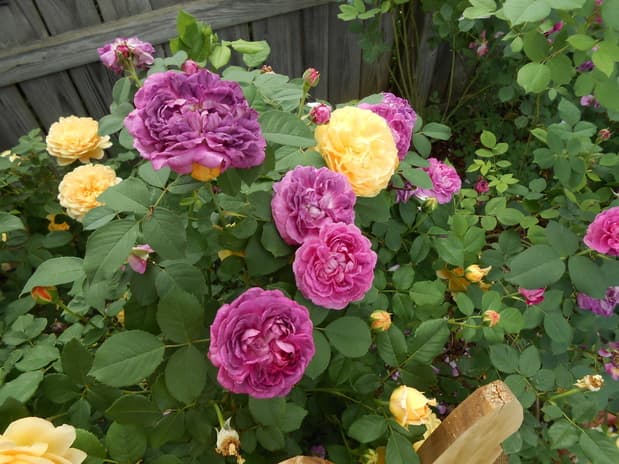
Rose types that are known to repeat:
- Hybrid Tea
- Floribunda
- Grandiflora
- Repeat blooming Climbers
- Some David Austin English Roses
- Shrub Roses
Tools you'll need:
- Very sharp pruners (I have an old pair of Felco pruners. I keep them rapier sharp, they make very clean cuts)
- A bucket, for hauling away your clippings. If you want to go all redneck, like me, you can use a trash can lid.

Step 1: Identify a Rose That Needs to Be Deadheaded
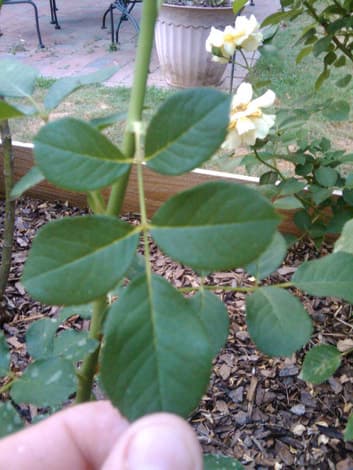
Step 2: Identify a 5-Leaflet Set
It is from this point down that you want to deadhead. Please note that you will never get a new stem any larger than the one you are cutting from, so you want to deadhead at least at the 5-leaflet point to ensure a strong rebloom. I try to move down the stem far enough so I cut at a point where the stem is about the circumference of a #2 pencil.
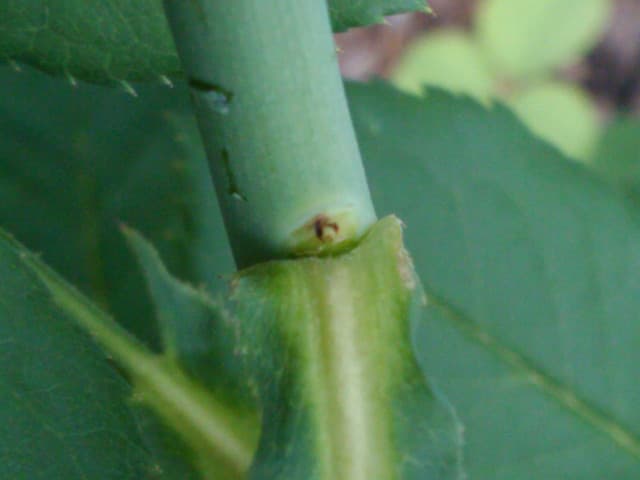
Step 3: Make Your Cut
You want to keep the inside of your rose bush as open as possible to promote good air circulation, so when you cut, do so from an outward facing leaflet. Notice the dot at the joining point of the leaflet and the stem? That's called a bud eye. It will be the point from which a new stem will grow.
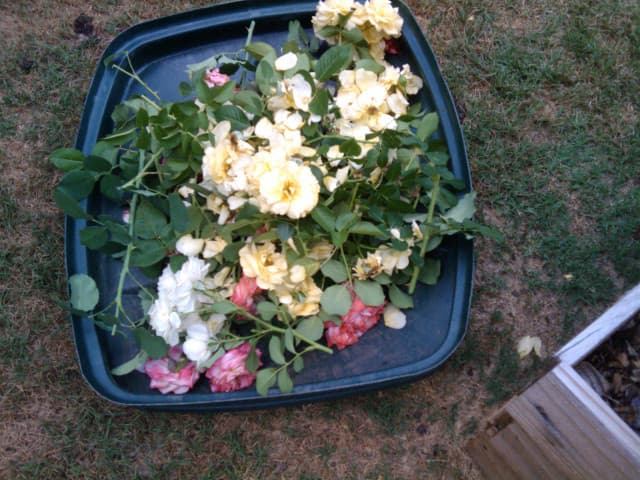
Step 4: Clean Up Your Mess
Keeping your rose beds free of cuttings and fallen leaves and blooms will help keep disease to a minimum. As mentioned earlier, I use a trash can lid to collect my cuttings. I filled this lid up in about 15 minutes. Once you get the hang of basic deadheading, you can deadhead about 20 rose bushes in 10 minutes or so.
Step 5: Watch for a New Stem to Appear
A new cane emerges. This is called a "stem on stem" and will produce new blooms.
Following this technique will increase the number of blooms you will see and enjoy during the growing season. Enjoy your new blooms!
Rose Chat Podcast
Looking for more? The podcast has you covered.
Learn more on the Rose Chat Podcast, every other week.